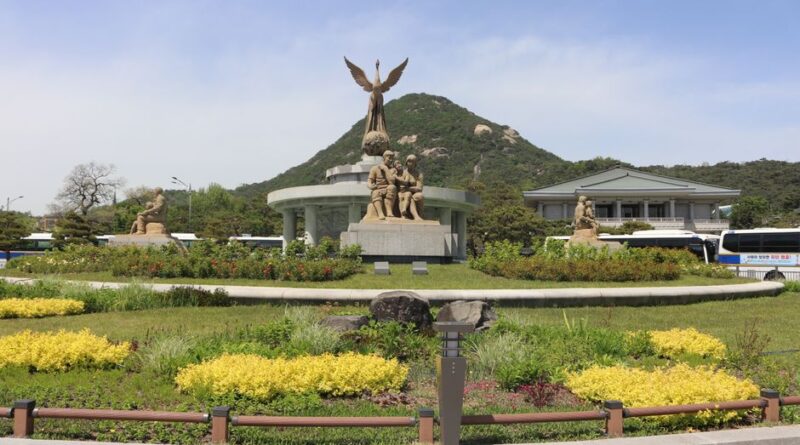
South Korean War Memorial Sparks Controversy Over Chinese War Narrative
\n\n
A significant War Memorial Controversy has engulfed South Korea after the War Memorial of Korea in Seoul exhibited China’s “Resist America, Aid Korea” narrative alongside the widely accepted historical account of the Korean War. This unprecedented display, which presents the conflict from China’s perspective—that it was an intervention against American aggression rather than an invasion to support North Korea—has ignited widespread outrage among the South Korean public, historians, and veterans, challenging the nation’s foundational understanding of the devastating 1950-53 conflict.
Key Takeaways
- This incident at a national historical institution blurs the established historical narrative of the Korean War, which is a cornerstone of South Korea’s national identity and security consciousness.
- The controversy raises concerns about potential historical revisionism and challenges the country’s collective memory, prompting a heated debate over who controls historical interpretation in a globalized context.
- Public backlash underscores deep-seated sensitivities regarding China’s historical role in the Korean Peninsula and highlights fears of external influence on the nation’s historical truth and memory.
The Korean War, known in South Korea as the “6.25 War,” is indelibly etched into the national psyche. It began on June 25, 1950, with North Korea’s unprovoked invasion of the South, precipitating a brutal three-year conflict that drew in international forces, most notably the United States and other United Nations member states, defending South Korea’s sovereignty. For South Koreans, the war represents a valiant struggle for freedom against communist aggression, a tremendous sacrifice that laid the groundwork for the nation’s vibrant democratic institutions and remarkable economic prosperity. The memory of the war is not merely historical; it remains a living testament to the nation’s resilience and its enduring commitment to self-determination.
China’s entry into the war in October 1950 drastically altered its course, marking a critical turning point that prolonged the conflict and led to an immense loss of life. Beijing’s official narrative, encapsulated by the term “Resist America, Aid Korea” (抗美援朝, Hangmi Wonjo), frames its involvement not as an intervention in a foreign civil war but as a necessary defense against perceived American expansionism and a direct threat to its newly established communist state. This perspective asserts that Chinese forces were deployed to counter UN forces, particularly the US, from advancing beyond the Yalu River and potentially invading Chinese territory, portraying their actions as a righteous act of national self-preservation against imperialist aggression. This interpretation starkly contrasts with the South Korean and UN view of China as an aggressor that intervened to prop up the North Korean regime.
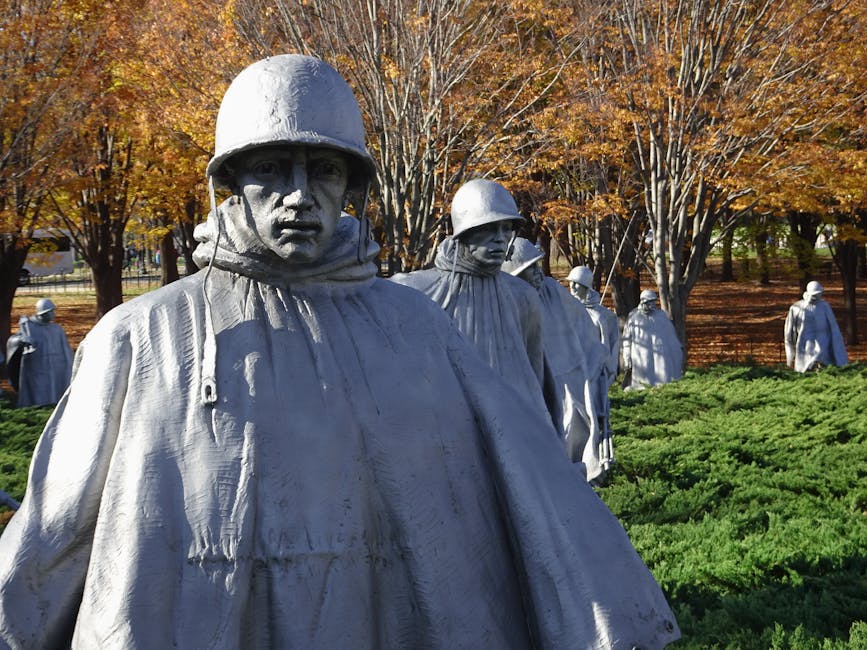
The recent controversy at the War Memorial of Korea stems from specific exhibits that presented these two fundamentally conflicting narratives side-by-side. Reports indicated that certain display panels and informational materials within the memorial’s exhibition included language or phrasing that seemed to uncritically validate or give undue prominence to the Chinese “Resist America, Aid Korea” viewpoint. This direct juxtaposition at an institution primarily dedicated to preserving the memory and sacrifices of South Korean and UN forces in defending the nation against aggression was seen as a profound betrayal of the victims and veterans, blurring the lines between aggressor and defender.
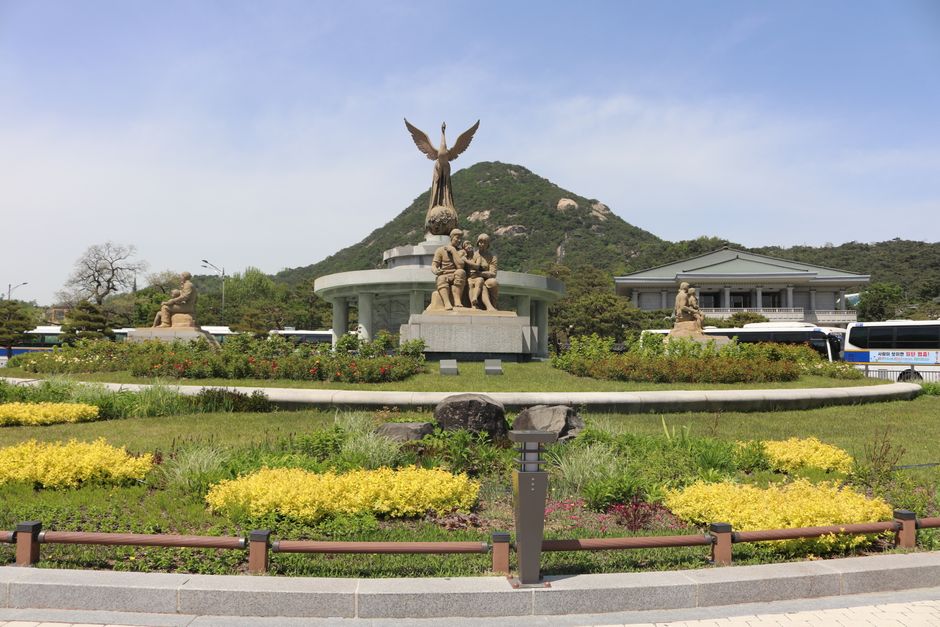
The War Memorial of Korea, located prominently in Yongsan District, Seoul, is more than just a museum; it serves as a powerful symbol of national remembrance, education, and patriotic pride. Established in 1994, it aims to honor those who fought and died during the Korean War and other conflicts, playing a crucial role in shaping public understanding of the nation’s security history and the immense sacrifices made to protect its sovereignty. For such a revered institution, the custodian of national memory, to appear to legitimize a narrative that fundamentally contradicts the South Korean historical consensus has sent shockwaves across the country, questioning the memorial’s curatorial integrity and its commitment to historical truth.
Historical interpretation, particularly concerning the Korean War, is an extremely sensitive and often contentious topic in South Korea. The nation’s identity is deeply intertwined with its history of overcoming adversity, defending democratic values, and resisting external threats. Any perceived attempt to dilute, distort, or relativize this foundational history, especially by incorporating narratives from historical adversaries without clear refutation or critical context, touches a raw nerve among the populace, veterans’ groups, and conservative organizations. Such actions are often viewed as an assault on national pride, memory, and the very sacrifices made for the nation’s existence.
Moreover, the incident unfolds against a complex and evolving geopolitical backdrop in Northeast Asia. South Korea maintains a robust security alliance with the United States, its primary security guarantor during and after the Korean War, which is still seen as crucial for deterrence against North Korea. Simultaneously, China has become a critical economic partner for South Korea but also represents a growing geopolitical rival and a significant regional power. The perceived introduction of a Chinese-centric narrative into a South Korean national war memorial is interpreted by some as a sign of appeasement, historical revisionism, or even an erosion of historical truth in the face of current geopolitical realities, raising profound questions about South Korea’s stance in the evolving regional power dynamics.
This development has ignited intense discussions on the appropriate role of national historical institutions in presenting complex national memories and the profound challenges inherent in historical reconciliation, particularly when dealing with former adversaries. Many critics argue that while understanding different historical perspectives can be valuable for academic discourse, it must be presented with rigorous historical context and, crucially, a clear affirmation of the nation’s own historical truth within the sacred space of a national memorial. The incident underscores the delicate and often contentious balance between historical scholarship, national identity, patriotism, and the imperatives of international relations. For further context on the historical interpretations of the Korean War, one might refer to scholarly analyses such as those available through the Wilson Center’s Digital Archive International History Project, found here, or contemporary academic discussions on historical memory in East Asia, like this resource.
The reaction from the South Korean public has been overwhelmingly negative, characterized by strong condemnation and emotional outcry across online communities and social media platforms. Citizens expressed outrage and disbelief that a national memorial could seemingly endorse or give equal standing to a narrative perceived as historical distortion. Many veterans and their families voiced profound disappointment, feeling that their sacrifices were being undermined or disrespected.
Online forums buzzed with calls for immediate correction of the exhibits, demanding accountability from the memorial’s leadership and the Ministry of Patriots and Veterans Affairs, which oversees the institution. Hashtags criticizing the move trended, with users expressing concerns about the potential for future generations to be exposed to a diluted or misleading account of their nation’s history. The incident has solidified a broad public consensus that historical truth, especially concerning foundational national conflicts, must be rigorously protected and presented without ambiguity.
To report grammatical errors, typos, or request factual corrections, please contact us at CHY011996@GMAIL.COM.
Original source: 전쟁기념관 ‘6·25전쟁-항미원조’ 中주장 나란히 소개 논란 – 동아일보
