Stock Gains Drive New Highs in Korean Investment Trends
\n\n
South Korean financial markets are witnessing a significant reallocation of capital as profits from a buoyant stock market increasingly flow into a diverse array of assets. This surge in liquidity is driving multiple sectors to new, unprecedented valuations, establishing fresh record highs across the board. The phenomenon signals a dynamic shift in Korean Investment Trends, reflecting robust investor confidence and a broad-based economic resurgence.
Key Takeaways
- South Korea’s robust equity market has generated substantial capital, now diversifying into new asset classes.
- This influx of capital is propelling various investment segments, from real estate to alternative assets, towards unprecedented valuation peaks.
- The current climate reflects heightened investor confidence and a significant expansion of market liquidity, shaping future economic landscapes.
The movement of substantial capital, originating from a period of exceptional stock market performance, is reshaping South Korea’s financial landscape. Investors, having reaped significant rewards from equity gains, are now deploying this liquidity into a wider spectrum of assets, thereby inflating valuations and setting new price benchmarks across various market segments.
This reallocation is a direct consequence of the South Korean stock market’s robust recovery and subsequent growth over recent years. Driven by strong export performance, particularly in technology and semiconductors, and a surge in retail investor participation, the KOSPI and KOSDAQ indices have seen impressive rallies, creating considerable wealth for individuals and institutions alike.
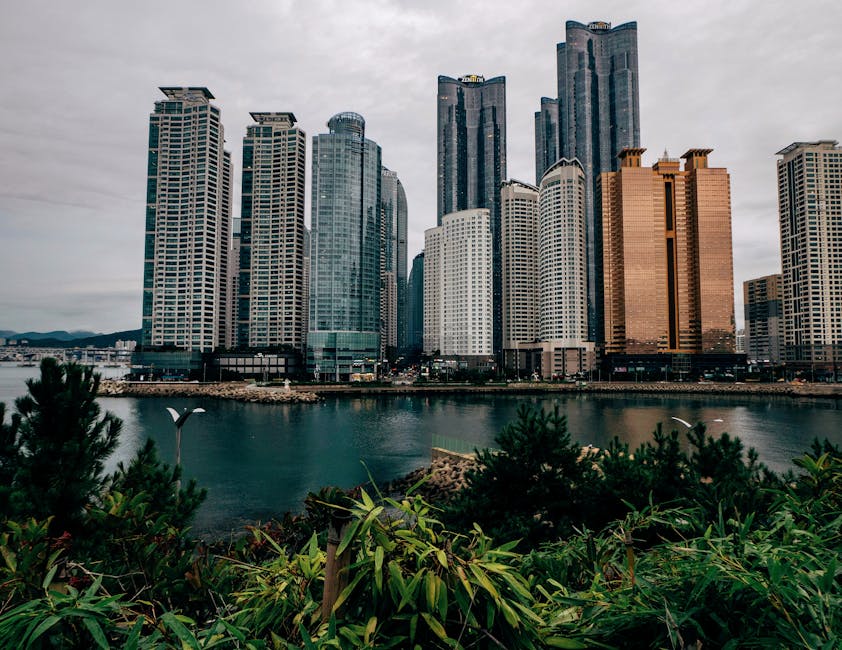
One of the most prominent destinations for this circulating capital is the real estate market. Despite a series of government measures aimed at cooling the housing sector, particularly in metropolitan areas like Seoul and Gyeonggi Province, demand remains high. The influx of liquidity from stock market profits continues to fuel property acquisitions, pushing residential and commercial property values to record levels and challenging affordability for many.
Beyond traditional real estate, significant portions of capital are also finding their way into alternative investment vehicles. These include private equity funds, venture capital targeting promising startups, and various structured products designed for more sophisticated investors seeking higher returns. This diversification reflects a growing appetite for risk and a search for yield beyond conventional assets.
The implications of such extensive capital movement are multifaceted for the broader South Korean economy. While it signals strong investor confidence and potentially stimulates economic activity in certain sectors, it also raises concerns about potential asset bubbles. The Bank of Korea, the nation’s central bank, has been closely monitoring these developments, weighing the balance between supporting growth and mitigating inflationary pressures.
Government authorities, including the Financial Services Commission, are also keenly observing the evolving market dynamics. Their focus remains on ensuring market stability, protecting investors, and addressing the social ramifications of rapidly escalating asset prices, particularly in the housing market. Future policy adjustments are likely to consider these factors.
The current phenomenon is not entirely unprecedented in South Korea’s economic history. Periods of rapid economic expansion and wealth creation have often led to similar cycles of capital reallocation and asset price surges. However, the scale and speed of the current movement, amplified by global liquidity and digital investment platforms, present unique challenges and opportunities.

Investor behavior has notably shifted, with a younger generation of Koreans demonstrating increased engagement in direct stock investments and a greater willingness to explore diverse asset classes. This demographic shift, coupled with an abundant supply of capital, is fundamentally altering the traditional investment landscape and driving innovation within financial services.
Globally, South Korea’s experience mirrors similar trends seen in other developed economies where loose monetary policies and government stimulus packages have injected vast amounts of liquidity into financial systems. However, the specific cultural and structural elements of the South Korean market lend a unique flavor to these economic trends.
Looking ahead, the sustainability of these new market highs will depend on a confluence of factors, including global economic recovery, the trajectory of inflation, and domestic monetary policy decisions. While the current environment presents opportunities, it also carries inherent risks of market corrections should external shocks or policy tightening occur. Foreign investors continue to watch these developments closely, seeking entry points into a dynamic and evolving market. More details on the broader economic context can be found on Wikipedia’s page on South Korea’s economy.
The rapid evolution of Korean Investment Trends underscores a pivotal moment for the nation’s financial future. As wealth continues to be generated and redeployed, both policymakers and market participants face the challenge of navigating this period of unprecedented growth while ensuring long-term stability and equitable prosperity for all.
To report grammatical errors, typos, or request factual corrections, please contact us at CHY011996@GMAIL.COM.
Original source: 주식으로 번 ‘돈’이 움직인다…줄줄이 ‘신고가’ 뚫었다 – v.daum.net
